It looks like I was right to doubt the reports a while back that said the new Iranian President Mahmoud Ahmadinejad was one of the students involved in the 1979 hostage taking of U.S. embassy workers.
Here is the latest:
CIA finds Iranian president likely not hostage-taker
A CIA report has determined with "relative certainty" that new Iranian President Mahmoud Ahmadinejad was not involved in the taking of U.S. hostages in 1979, two government officials told CNN.
I don’t know that this will make any real difference in U.S. - Iranian relations, however.
Friday, August 12, 2005


Thursday, August 11, 2005
Lubbock, Texas is 2nd Most “Conservative” City
According to this study, my former home and birthplace of Lubbock, Texas is the second most conservative city in the U.S.
At first, I was intrigued by the study that purports to list the most conservative and most liberal cities in the country wondering what criteria they used to make these ideological determinations. Unfortunately, all they did was look at the 2004 voting records and assigned the “conservative” label to cities that voted heavily for Bush and the “liberal” label to those that voted for Kerry. (Yawn) So it really doesn’t tell us anything we don’t already know.
But just for fun, here is the list they came up with:
Top 10 Liberal Cities:
1) Detroit, Michigan
2) Gary, Indiana
3) Berkeley, California
4) Washington, D.C.
5) Oakland, California
6) Inglewood, California
7) Newark, New Jersey
8) Cambridge, Massachusetts
9) San Francisco, California
10) Flint, Michigan
Top 10 Conservative Cities:
1) Provo, Utah
2) Lubbock, Texas
3) Abilene, Texas
4) Hialeah, Florida
5) Plano, Texas
6) Colorado Springs, Colorado
7) Gilbert, Arizona
8) Bakersfield, California
9) Lafayette, Louisiana
10) Orange, California
Out of 237 cities in the survey, San Antonio ranks as the 64th most conservative and 175th most liberal. Austin, by contrast, ranks as the 145th most conservative and 93rd most liberal.
Of course, these rankings would have been very different had the Republicans been running a non-Texan at the top of their ticket, which just shows the weakness of the methodology used in this so-called study.
Still, I find it amusing that I have lived and worked in some of the most conservative places in the country and despite the fact that my demographic makeup would place me squarely in the middle of the conservative fold (white, middle-aged, male, married), I have maintained a decidely liberal outlook on life.
The authors of the study make a big point about the racial makeup distinguishing the cities in each group - with the liberal cities having large black populations and the conservative ones being mostly white. They go on to make a lot of observations about why this is - mostly things we have heard before. But the thing that has intrigued me lately is why this continues to matter and how long it can last.
It is a historical fact that the Civil Rights movement drove most conservative southerners out of the Democratic Party and into the welcoming arms of the Republicans. But surely this should start to settle out over time as the initial shock of desegregation wanes from one generation to the next. I would hope that my children are less inclined to have hangups over race than I do just as I have had less than my parents.
Indeed, I would think that most people would not consider race as a primary factor in their choice of a political party today. Still, we have this obvious political divide that simple surveys like this highlight.
Having lived in very conservative communities such as Lubbock and Kerrville (even more conservative than Lubbock had it been included in the list) I truly believe it is not outside the realm of possibility for there to be a major political shift in the near future. If you look around Lubbock at some of the nearby communities you find places with names like Roosevelt and New Deal and you begin to realize that this area used to be a Democratic stronghold just a few generations back. And then you realize that things haven’t changed that much - the area is highly dependent on government programs like agricultural subsidies for cotton and federal emergency relief funds that helped rebuild much of the downtown area after a massive tornado tore through the city in the early 1970s.
As Republicans continue to demonstrate at both the federal and state level that they are incapable of governing in an efficient manner (ballooning federal deficits and a stagnant economy - two special sessions and still no clue as to how to adequately fund public education) their support among the highly practical people who live in these areas is going to erode and no amount of terror alerts is going to scare them back into the fold.
At first, I was intrigued by the study that purports to list the most conservative and most liberal cities in the country wondering what criteria they used to make these ideological determinations. Unfortunately, all they did was look at the 2004 voting records and assigned the “conservative” label to cities that voted heavily for Bush and the “liberal” label to those that voted for Kerry. (Yawn) So it really doesn’t tell us anything we don’t already know.
But just for fun, here is the list they came up with:
Top 10 Liberal Cities:
1) Detroit, Michigan
2) Gary, Indiana
3) Berkeley, California
4) Washington, D.C.
5) Oakland, California
6) Inglewood, California
7) Newark, New Jersey
8) Cambridge, Massachusetts
9) San Francisco, California
10) Flint, Michigan
Top 10 Conservative Cities:
1) Provo, Utah
2) Lubbock, Texas
3) Abilene, Texas
4) Hialeah, Florida
5) Plano, Texas
6) Colorado Springs, Colorado
7) Gilbert, Arizona
8) Bakersfield, California
9) Lafayette, Louisiana
10) Orange, California
Out of 237 cities in the survey, San Antonio ranks as the 64th most conservative and 175th most liberal. Austin, by contrast, ranks as the 145th most conservative and 93rd most liberal.
Of course, these rankings would have been very different had the Republicans been running a non-Texan at the top of their ticket, which just shows the weakness of the methodology used in this so-called study.
Still, I find it amusing that I have lived and worked in some of the most conservative places in the country and despite the fact that my demographic makeup would place me squarely in the middle of the conservative fold (white, middle-aged, male, married), I have maintained a decidely liberal outlook on life.
The authors of the study make a big point about the racial makeup distinguishing the cities in each group - with the liberal cities having large black populations and the conservative ones being mostly white. They go on to make a lot of observations about why this is - mostly things we have heard before. But the thing that has intrigued me lately is why this continues to matter and how long it can last.
It is a historical fact that the Civil Rights movement drove most conservative southerners out of the Democratic Party and into the welcoming arms of the Republicans. But surely this should start to settle out over time as the initial shock of desegregation wanes from one generation to the next. I would hope that my children are less inclined to have hangups over race than I do just as I have had less than my parents.
Indeed, I would think that most people would not consider race as a primary factor in their choice of a political party today. Still, we have this obvious political divide that simple surveys like this highlight.
Having lived in very conservative communities such as Lubbock and Kerrville (even more conservative than Lubbock had it been included in the list) I truly believe it is not outside the realm of possibility for there to be a major political shift in the near future. If you look around Lubbock at some of the nearby communities you find places with names like Roosevelt and New Deal and you begin to realize that this area used to be a Democratic stronghold just a few generations back. And then you realize that things haven’t changed that much - the area is highly dependent on government programs like agricultural subsidies for cotton and federal emergency relief funds that helped rebuild much of the downtown area after a massive tornado tore through the city in the early 1970s.
As Republicans continue to demonstrate at both the federal and state level that they are incapable of governing in an efficient manner (ballooning federal deficits and a stagnant economy - two special sessions and still no clue as to how to adequately fund public education) their support among the highly practical people who live in these areas is going to erode and no amount of terror alerts is going to scare them back into the fold.
Wednesday, August 10, 2005
Roberts making social conservatives nervous
Other than a complementary copy of USA Today that I could pick up at the front desk of our hotel each morning, I was pretty much cut off from my normal avalanche of news consumption during my vacation. For the plane ride home I happened to pick up a copy of the Financial Times which I never read and was pleasantly surprised to find it chock full of interesting and well-written articles.
I found this piece on John Roberts’ Supreme Court nomination to be especially well done. It’s not really about John Roberts so much as it is about the gay rights controversy now before the Supreme Court.
The author of the piece, Patti Waldmeir, talks to two people representing either side of the debate - “Alan Chambers is a former gay evangelist who spends his life trying to persuade homosexuals to turn straight. Phyllis Hunt is a lesbian preacher who ministers to those who are gay and proud of it.” - to set up the article before delving into the political aftermath resulting from the Lawrence vs. Texas decision authored by Justice Anthony Kennedy that struck down Texas’ anti-sodomy laws in 2003.
I have previously outlined my theory on sexual orientation here. I believe that if more people could accept that sexual orientation is largely a matter of biology and not “choice” they would be more accepting of it. In the case of Chambers, it seems clear to me that he would fall into that sub-group of people on the edge between gay and straight, while Hunt likely falls into the middle of the gay/lesbian pool. The sad part of the story is that while Chambers is now married to a woman and has adopted two children, his efforts have helped to deny that same privilege to Mrs. Hunt whose efforts to adopt a child with her partner were stymied by laws preventing gays from adopting children.
To the dismay of many social conservatives, Anthony Kennedy has become a driving force in the move to grant equal rights and protections to gays. His majority opinion in the Lawrence vs. Texas case was sweeping and may have inadvertently fueled the push for gay marriages that followed shortly thereafter.
The Lawrence case to me would seem like a no-brainer. Regardless of your views on homosexuality, who would support giving the police and the government the power to barge into your bedroom and enforce someone else’s code as to how you and any other consenting adult should behave? Kennedy wasn’t being a liberal in his decision, he was being a libertarian.
But the irony of the case was that in striking such a resounding blow for gay rights, the Lawrence case unleashed a series of actions and reactions that very likely helped to put George W. Bush back in the White House in 2004. By rushing out to push for gay marriage in states like California, Massachusetts and Hawaii, the gay community prompted a backlash from social conservatives who placed anti-gay marriage referendums on the ballots designed to draw out their supporters and build up support for Bush and his radical Republican cohorts.
Now we have those same social conservatives suddenly concerned to find that their new knight in shining armor has done pro-bono work on behalf of gay rights groups in the past. Does this mean that Roberts will turn out to be more like Anthony Kennedy than Antonin Scalia? No one can be sure, but it has some on the far-right suddenly nervous. Kennedy is, after all, the one who wrote this infamous phrase in the Lawrence decision:
"At the heart of liberty is the right to define one's own concept of existence, of meaning, of the universe and of the mystery of human life."
Scalia has ridiculed this idea calling it the “sweet-mystery-of-life passage” while Robert Bork complains that it is less an argument than a 1960s oration and an ode to radical personal autonomy.
I find it most disturbing that we have people on the Supreme Court who find personal autonomy to be a radical notion. Those on the right don’t want you to define your own concept of existence because they already have their own neatly constrained definition that they want to shoehorn everyone into. Is Roberts on their side, or not? We may not find out for some time, especially if the Bush administration succeeds in suppressing any more information about Roberts that might prove problematic for his swift approval.
I found this piece on John Roberts’ Supreme Court nomination to be especially well done. It’s not really about John Roberts so much as it is about the gay rights controversy now before the Supreme Court.
The author of the piece, Patti Waldmeir, talks to two people representing either side of the debate - “Alan Chambers is a former gay evangelist who spends his life trying to persuade homosexuals to turn straight. Phyllis Hunt is a lesbian preacher who ministers to those who are gay and proud of it.” - to set up the article before delving into the political aftermath resulting from the Lawrence vs. Texas decision authored by Justice Anthony Kennedy that struck down Texas’ anti-sodomy laws in 2003.
I have previously outlined my theory on sexual orientation here. I believe that if more people could accept that sexual orientation is largely a matter of biology and not “choice” they would be more accepting of it. In the case of Chambers, it seems clear to me that he would fall into that sub-group of people on the edge between gay and straight, while Hunt likely falls into the middle of the gay/lesbian pool. The sad part of the story is that while Chambers is now married to a woman and has adopted two children, his efforts have helped to deny that same privilege to Mrs. Hunt whose efforts to adopt a child with her partner were stymied by laws preventing gays from adopting children.
To the dismay of many social conservatives, Anthony Kennedy has become a driving force in the move to grant equal rights and protections to gays. His majority opinion in the Lawrence vs. Texas case was sweeping and may have inadvertently fueled the push for gay marriages that followed shortly thereafter.
The Lawrence case to me would seem like a no-brainer. Regardless of your views on homosexuality, who would support giving the police and the government the power to barge into your bedroom and enforce someone else’s code as to how you and any other consenting adult should behave? Kennedy wasn’t being a liberal in his decision, he was being a libertarian.
But the irony of the case was that in striking such a resounding blow for gay rights, the Lawrence case unleashed a series of actions and reactions that very likely helped to put George W. Bush back in the White House in 2004. By rushing out to push for gay marriage in states like California, Massachusetts and Hawaii, the gay community prompted a backlash from social conservatives who placed anti-gay marriage referendums on the ballots designed to draw out their supporters and build up support for Bush and his radical Republican cohorts.
Now we have those same social conservatives suddenly concerned to find that their new knight in shining armor has done pro-bono work on behalf of gay rights groups in the past. Does this mean that Roberts will turn out to be more like Anthony Kennedy than Antonin Scalia? No one can be sure, but it has some on the far-right suddenly nervous. Kennedy is, after all, the one who wrote this infamous phrase in the Lawrence decision:
"At the heart of liberty is the right to define one's own concept of existence, of meaning, of the universe and of the mystery of human life."
Scalia has ridiculed this idea calling it the “sweet-mystery-of-life passage” while Robert Bork complains that it is less an argument than a 1960s oration and an ode to radical personal autonomy.
I find it most disturbing that we have people on the Supreme Court who find personal autonomy to be a radical notion. Those on the right don’t want you to define your own concept of existence because they already have their own neatly constrained definition that they want to shoehorn everyone into. Is Roberts on their side, or not? We may not find out for some time, especially if the Bush administration succeeds in suppressing any more information about Roberts that might prove problematic for his swift approval.
Tuesday, August 09, 2005
Disney adventures
We made it back from a week-long trip to Disney World on Saturday, a day later than we expected. Our flight had been scheduled to leave at 9 p.m. but was delayed more than two hours due to bad weather. So I was more than happy to volunteer to be bumped from the flight when they announced that they were overbooked. We got a free night at an AmeriSuites, some food vouchers for breakfast and lunch, a 10:30 a.m. flight the next morning and travel vouchers for another flight we can use anytime during the next year.
When we flew into Orlando on Aug. 1 we were immediately met by a thunderstorm that had blown in off of the coast. We asked our shuttle driver if it was supposed to rain a lot and he said it rains everyday there around 4 p.m. Sure enough, almost like clockwork, we got rain storms every afternoon. Fortunately, they would not last too long and did not spoil our vacation.
There is far more to do in Orlando than can be covered in a week. We spent a day and a half at Magic Kingdom, a day and a half at Epcot and one day at Animal Kingdom. We will have to visit Disney’s fourth theme park - MGM-Disney - on our next trip.
I was pleasantly surprised by how much there was to do even when you are avoiding all of the bumpy, roller-coaster rides. With my son not yet 2 and my wife 5-months pregnant, we were limited on what rides we could go on. No Space Mountain or Big Thunder Mountain Railroad rides for us. Instead, we did the traditional rides like Flying Dumbo, the Mad Hatter’s Tea Cup ride and a lot of the laid back, slow-moving coaster or boat rides that take you on a tour of Winnie the Pooh’s 100 Acre Woods or Peter Pan’s NeverLand.
Disney World is enormous. They say there are enough Disney employees to populate a moderate-sized city and surely enough animatronic characters to populate a small town. I’ve always loved history so I made a special point of going to see the American Presidents show at Magic Kingdom where they have animatronic characters on stage representing every president from George W. to George W. While I enjoyed the performance, it managed to put my son to sleep which was actually a good thing. It was the only time we managed to get him down for an afternoon nap during the entire vacation.
Even better was a history show at Epcot featuring an animatronic Benjamin Franklin and Mark Twain. They did a big overview of American history that managed to showcase or mention every historical figure with the odd exception of Abe Lincoln. (Abe was featured prominently in the President’s show at Magic Kingdom.)
Even more impressive to me than the animatronics, however, were the 3-D movies. The Mickey’s Philharmagic show (featuring Donald Duck) was terrific with the best 3-D effects I have ever seen (supplemented with spritzing water and smellovision built into the stadium seating). However, it was a little too intense for my son who quickly shed his 3-D glasses and buried his head in mommy’s shoulder the first time a character popped out of the screen. We realized only later that it was the first time he had ever been in a movie theater and seen anything bigger than a widescreen TV.
When we flew into Orlando on Aug. 1 we were immediately met by a thunderstorm that had blown in off of the coast. We asked our shuttle driver if it was supposed to rain a lot and he said it rains everyday there around 4 p.m. Sure enough, almost like clockwork, we got rain storms every afternoon. Fortunately, they would not last too long and did not spoil our vacation.
There is far more to do in Orlando than can be covered in a week. We spent a day and a half at Magic Kingdom, a day and a half at Epcot and one day at Animal Kingdom. We will have to visit Disney’s fourth theme park - MGM-Disney - on our next trip.
I was pleasantly surprised by how much there was to do even when you are avoiding all of the bumpy, roller-coaster rides. With my son not yet 2 and my wife 5-months pregnant, we were limited on what rides we could go on. No Space Mountain or Big Thunder Mountain Railroad rides for us. Instead, we did the traditional rides like Flying Dumbo, the Mad Hatter’s Tea Cup ride and a lot of the laid back, slow-moving coaster or boat rides that take you on a tour of Winnie the Pooh’s 100 Acre Woods or Peter Pan’s NeverLand.
Disney World is enormous. They say there are enough Disney employees to populate a moderate-sized city and surely enough animatronic characters to populate a small town. I’ve always loved history so I made a special point of going to see the American Presidents show at Magic Kingdom where they have animatronic characters on stage representing every president from George W. to George W. While I enjoyed the performance, it managed to put my son to sleep which was actually a good thing. It was the only time we managed to get him down for an afternoon nap during the entire vacation.
Even better was a history show at Epcot featuring an animatronic Benjamin Franklin and Mark Twain. They did a big overview of American history that managed to showcase or mention every historical figure with the odd exception of Abe Lincoln. (Abe was featured prominently in the President’s show at Magic Kingdom.)
Even more impressive to me than the animatronics, however, were the 3-D movies. The Mickey’s Philharmagic show (featuring Donald Duck) was terrific with the best 3-D effects I have ever seen (supplemented with spritzing water and smellovision built into the stadium seating). However, it was a little too intense for my son who quickly shed his 3-D glasses and buried his head in mommy’s shoulder the first time a character popped out of the screen. We realized only later that it was the first time he had ever been in a movie theater and seen anything bigger than a widescreen TV.
Monday, August 08, 2005
Bonilla wants a new address for the White House
I was both embarrassed and flustered to read last week that my Congressman - Henry Bonilla - has introduced legislation in the House to change the name of 16th Street NW in Washington, D.C. to Ronald Reagan Boulevard.
There really is no excuse for something like this. Bonilla is not stupid so I don’t know whether he is doing this just to try and further ingratiate himself with his party’s core of right-wingers who worship Reagan like some kind of demi-God or whether he is just demonstrating that he can be a first-class jerk.
First, there is no dearth of honors that have already been heaped on our 40th president who has the Ronald Reagan Washington National Airport and the Ronald Reagan Building and International Trade Center in D.C. dedicated to him. But that is not enough for the cultish Reagan worshipers out there who won’t stop until they get Reagan’s mug chiseled onto Mount Rushmore next to Washington and Lincoln. There is already an organized effort by radical conservatives to have something named after Reagan in every county in the United States. So far they have succeeded in naming more than 63 streets, buildings, schools, etc. after him.
But 16th Street in D.C. is going too far. The significance of 16th Street is that it has given the White House its historic address, 1600 Pennsylvania Avenue.
Second, the District of Columbia is one of the most heavily Democratic areas in the nation and having some Republican congressman from Texas waltz in and rename one of their major thoroughfares after a Republican icon is little more than a slap in the face.
Fortunately, Rep. Thomas M. Davis III (R-Va.), chairman of the House Government Reform Committee which has jurisdiction over Bonilla's legislation, recognizes this and has called Bonilla’s bill "ridiculous" and said he would put it in the "appropriate file."
"If Congressman Bonilla wants to name anything else, he has to look at his own district in San Antonio," Davis said.
I certainly hope not. If Bonilla really wants to honor the memory of Ronald Reagan then perhaps he should join with his widow Nancy Reagan in supporting federal funding of embryonic stem cell research to help patients suffering from Alzheimer’s and other debilitating diseases. But since he refuses to do that then maybe he should just shut up and quit embarrassing his constituents back home.
I see via The Jeffersonian that some angry D.C. residents want to retaliate by renaming The Riverwalk for former D.C. mayor Marion Berry. Cinncinnatus has an even better idea of renaming some streets in the city’s heaviest Republican areas after former President Bill Clinton. But the one name I would like to see changed is the one that hangs on the offices for the 23rd Congressional District from Texas.
There really is no excuse for something like this. Bonilla is not stupid so I don’t know whether he is doing this just to try and further ingratiate himself with his party’s core of right-wingers who worship Reagan like some kind of demi-God or whether he is just demonstrating that he can be a first-class jerk.
First, there is no dearth of honors that have already been heaped on our 40th president who has the Ronald Reagan Washington National Airport and the Ronald Reagan Building and International Trade Center in D.C. dedicated to him. But that is not enough for the cultish Reagan worshipers out there who won’t stop until they get Reagan’s mug chiseled onto Mount Rushmore next to Washington and Lincoln. There is already an organized effort by radical conservatives to have something named after Reagan in every county in the United States. So far they have succeeded in naming more than 63 streets, buildings, schools, etc. after him.
But 16th Street in D.C. is going too far. The significance of 16th Street is that it has given the White House its historic address, 1600 Pennsylvania Avenue.
Second, the District of Columbia is one of the most heavily Democratic areas in the nation and having some Republican congressman from Texas waltz in and rename one of their major thoroughfares after a Republican icon is little more than a slap in the face.
Fortunately, Rep. Thomas M. Davis III (R-Va.), chairman of the House Government Reform Committee which has jurisdiction over Bonilla's legislation, recognizes this and has called Bonilla’s bill "ridiculous" and said he would put it in the "appropriate file."
"If Congressman Bonilla wants to name anything else, he has to look at his own district in San Antonio," Davis said.
I certainly hope not. If Bonilla really wants to honor the memory of Ronald Reagan then perhaps he should join with his widow Nancy Reagan in supporting federal funding of embryonic stem cell research to help patients suffering from Alzheimer’s and other debilitating diseases. But since he refuses to do that then maybe he should just shut up and quit embarrassing his constituents back home.
I see via The Jeffersonian that some angry D.C. residents want to retaliate by renaming The Riverwalk for former D.C. mayor Marion Berry. Cinncinnatus has an even better idea of renaming some streets in the city’s heaviest Republican areas after former President Bill Clinton. But the one name I would like to see changed is the one that hangs on the offices for the 23rd Congressional District from Texas.
Friday, July 29, 2005
Vacation

I'll be on vacation next week with no access to a computer. Back on Aug. 8.
In the meantime, here is a random list of 25 songs off of my IPod to fill the rest of this space:
Moonlight Becomes You - Bing Crosby
Love or Confusion - Jimi Hendrix
I'll Be Seeing You (In All The Old Familiar Places) - Bing Crosby
Tombstone Blues - Bob Dylan
Slither - Velvet Revolver
If I Can't Have You - Bee Gees
Body and Soul - Coleman Hawkins
Soul Kitchen - The Doors
Pardon Me - Incubus
Rockin' Chair - Louis Armstrong
This Little Girl of Mine - Ray Charles
Lester Leaps In - Count Basie Orchestra
We're An American Band - Grand Funk Railroad
Wrap Your Troubles in Dreams - Bing Crosby
That'll Be The Day - Buddy Holly
You Make My Dreams Come True - Hall & Oates
She's No Lady - Lyle Lovett
Runnin' With The Devil - Van Halen
Good Vibrations - Beach Boys
Dreamtime-Shake It Up - John Waite
Don't Be Cruel - Elvis Presley
Walk On - U2
Riverboat Shuffle - Frankie Trumbauer Orchestra featuring Bix Biederbecke
You Got Lucky - Tom Petty and The Heartbreakers
Oye Como Va - Santana
Why we went to war
Over at TPMCafe today, former CIA analyst Larry Johnson goes point-by-point through the lies and deceptions being propogated by the GOP to cover up their complicity in the Valerie Plame scandal.
FACT 1--Valerie (Plame) Wilson was undercover and occupied a sensitive position.
FACT 2--Valerie (Plame) Wilson's relationship with the CIA was not known until revealed by Robert Novak's column.
FACT 3--Valerie Plame Wilson did not send her husband on the trip to Niger.
These are things that should be obvious to anyone living in the “reality-based community” as opposed to the fantasy world inhabited by most Bush apologists these days.
But the thing I found most interesting was a discussion by one of the commenters trying to understand the real motivation behind the Bush administration’s rush to war in the first place.
I've been thinking bsout this for a while trying to come up with a plausible reason. My first assumption is that nothing we have been told so far is it: Building Democracy in Iraq? Please, Cheney barely tolerates democracy here, he could give a rats ass about it in Iraq. There has to be a real politik reason; Cheney, Rumsfeld - these guys cut their teeth under Kissinger. WMD? If anything the Bush admin knew better than anyone that they didn't exist. Oil? Sure it is about oil, everything in the Middle East is, but still why invade?
Here is the scenario that I think makes sense, assuming that Bush, Cheney et al aren't total fools this is my guess as to what happened:
1) The stuff we did in the 90s (bombings and so on) was more effective at destroying Sadaam's WMD capabilities than we realized.
2) It was very much in Sadaam's interested to make sure that no-one realized this. His power rested on both Iraqis and his neighbors thinking he was still strong.
3) After 9/11 the CIA, State Department and UN started looking at Sadaam more closely and began to see how much of a paper tiger he was. (Both Kay and Blix have said they knew he had no WMD)
4) Everyone in the Bush admin who looked into this realized it too, the CIA and State department working independently came to the same conclusions.
5) Sadaam called Bush's bluff and said the inspectors could come in. The last thing Bush wanted was for the inspectors to prove once and for all that Sadaam was toothless.
6) Hence the rush to war.
7) The real motivation for the war wasn't that Sadaam was strong and a threat; it was just the opposite, he was becoming too weak! We need a balance of powers in the Middle East - Syria, Turkey, Iraq, Iran, Saudia Arabia.
8) The plan was to quickly topple Sadaam, put Chalabi in power and have a new, more reliable ally as our counterweight to Iran (remember we backed Sadaam in the war with Iran).
9) That blew up in their faces, both because they didn't prepare for the aftermath and didn't understand just how much of a mess Iraq's infrastructure had become.
10) What also didn't help is that Chalabi was playing them for fools while secretly working for Iran.
Ultimately I can see a valid motive here, allowing Iraq to disinigrate into chaos as Sadaam crumbled from within would leave it ripe for take over by Iran. But here is the thing, by doing it the way they did they totally lost any chance of success. The likely end result is now Iraq aligned with Iran, with at best an independent Kurdistan in the north aligned with Turkey (how ironic is that? The thing Turkey most feared may now very well be in their best interest! Losing a little territory along the border and their Kurdish citizens may be worth having another staunchly secular regime with decent Oil revenue opposed to Iran as a neighbor).
If we had waited for Sadaam to crumble under the weight of his own corruption and Iran tried to move in to the void we could have put together a coalition of Arab states to join us in protecting Iraq from the Persian aggressors.
A very interesting analysis. I don’t agree with it entirely, but it makes a lot of very valid points.
I think there is no question that the timing had mostly to do with the Republican’s desire to have the public perception that they were taking a strong and aggressive stand against terrorism in the wake of the 9/11 attacks. This was especially important on the eve of the 2002 mid-term elections when Republicans were trying to regain control of the Senate. And once they committed to that aggressive course of action they set the ball rolling on a track where they could not turn back without undermining that desired public perception. Backing down in any way and allowing U.N. inspectors to prove that there were no WMDs would have been seen as a political victory for Democrats who were challenging Bush’s post-9/11 leadership in the run-up to the 2004 presidential election.
Supporting the war became a political imperative and at that point the truth became expendable. Intelligence that supported the war scenario was thrust front and center regardless of how shaky its credibility (i.e. the centrifuge tubes, the mobile bioweapons lab, etc.) while intelligence that ran contrary was ignored and/or refuted vigorously - which of course is what led to the outing of Valerie Plame’s identity.
FACT 1--Valerie (Plame) Wilson was undercover and occupied a sensitive position.
FACT 2--Valerie (Plame) Wilson's relationship with the CIA was not known until revealed by Robert Novak's column.
FACT 3--Valerie Plame Wilson did not send her husband on the trip to Niger.
These are things that should be obvious to anyone living in the “reality-based community” as opposed to the fantasy world inhabited by most Bush apologists these days.
But the thing I found most interesting was a discussion by one of the commenters trying to understand the real motivation behind the Bush administration’s rush to war in the first place.
I've been thinking bsout this for a while trying to come up with a plausible reason. My first assumption is that nothing we have been told so far is it: Building Democracy in Iraq? Please, Cheney barely tolerates democracy here, he could give a rats ass about it in Iraq. There has to be a real politik reason; Cheney, Rumsfeld - these guys cut their teeth under Kissinger. WMD? If anything the Bush admin knew better than anyone that they didn't exist. Oil? Sure it is about oil, everything in the Middle East is, but still why invade?
Here is the scenario that I think makes sense, assuming that Bush, Cheney et al aren't total fools this is my guess as to what happened:
1) The stuff we did in the 90s (bombings and so on) was more effective at destroying Sadaam's WMD capabilities than we realized.
2) It was very much in Sadaam's interested to make sure that no-one realized this. His power rested on both Iraqis and his neighbors thinking he was still strong.
3) After 9/11 the CIA, State Department and UN started looking at Sadaam more closely and began to see how much of a paper tiger he was. (Both Kay and Blix have said they knew he had no WMD)
4) Everyone in the Bush admin who looked into this realized it too, the CIA and State department working independently came to the same conclusions.
5) Sadaam called Bush's bluff and said the inspectors could come in. The last thing Bush wanted was for the inspectors to prove once and for all that Sadaam was toothless.
6) Hence the rush to war.
7) The real motivation for the war wasn't that Sadaam was strong and a threat; it was just the opposite, he was becoming too weak! We need a balance of powers in the Middle East - Syria, Turkey, Iraq, Iran, Saudia Arabia.
8) The plan was to quickly topple Sadaam, put Chalabi in power and have a new, more reliable ally as our counterweight to Iran (remember we backed Sadaam in the war with Iran).
9) That blew up in their faces, both because they didn't prepare for the aftermath and didn't understand just how much of a mess Iraq's infrastructure had become.
10) What also didn't help is that Chalabi was playing them for fools while secretly working for Iran.
Ultimately I can see a valid motive here, allowing Iraq to disinigrate into chaos as Sadaam crumbled from within would leave it ripe for take over by Iran. But here is the thing, by doing it the way they did they totally lost any chance of success. The likely end result is now Iraq aligned with Iran, with at best an independent Kurdistan in the north aligned with Turkey (how ironic is that? The thing Turkey most feared may now very well be in their best interest! Losing a little territory along the border and their Kurdish citizens may be worth having another staunchly secular regime with decent Oil revenue opposed to Iran as a neighbor).
If we had waited for Sadaam to crumble under the weight of his own corruption and Iran tried to move in to the void we could have put together a coalition of Arab states to join us in protecting Iraq from the Persian aggressors.
A very interesting analysis. I don’t agree with it entirely, but it makes a lot of very valid points.
I think there is no question that the timing had mostly to do with the Republican’s desire to have the public perception that they were taking a strong and aggressive stand against terrorism in the wake of the 9/11 attacks. This was especially important on the eve of the 2002 mid-term elections when Republicans were trying to regain control of the Senate. And once they committed to that aggressive course of action they set the ball rolling on a track where they could not turn back without undermining that desired public perception. Backing down in any way and allowing U.N. inspectors to prove that there were no WMDs would have been seen as a political victory for Democrats who were challenging Bush’s post-9/11 leadership in the run-up to the 2004 presidential election.
Supporting the war became a political imperative and at that point the truth became expendable. Intelligence that supported the war scenario was thrust front and center regardless of how shaky its credibility (i.e. the centrifuge tubes, the mobile bioweapons lab, etc.) while intelligence that ran contrary was ignored and/or refuted vigorously - which of course is what led to the outing of Valerie Plame’s identity.
Thursday, July 28, 2005
GOP selling pork for votes
In yet another ugly display of arm-twisting, bribery and threats, House Majority Leader Tom “The Hammer” DeLay assured passage of the Central American Free Trade Agreement (CAFTA) last night by holding the vote open 47 minutes past the traditional 15-minute deadline.
The 217 to 215 vote came just after midnight, in a dramatic finish that highlighted the intensity brought by both sides to the battle. When the usual 15-minute voting period expired at 11:17 p.m., the no votes outnumbered the yes votes by 180 to 175, with dozens of members undeclared. House Republican leaders kept the voting open for another 47 minutes, furiously rounding up holdouts in their own party until they had secured just enough to ensure approval....
This sounds awfully similar to the bribery and threats that the GOP used to pass its Medicare boondoggle last year.
We may not know right away (or ever) if House members were threatened the way they were during the Medicare vote, but it is clear that bribery was on the table.
The last-minute negotiations for Republican votes resembled the wheeling and dealing on a car lot. Republicans who were opposed or undecided were courted during hurried meetings in Capitol hallways, on the House floor and at the White House. GOP leaders told their rank and file that if they wanted anything, now was the time to ask, lawmakers said, and members took advantage of the opportunity by requesting such things as fundraising appearances by Cheney and the restoration of money the White House has tried to cut from agriculture programs. Lawmakers also said many of the favors bestowed in exchange for votes will be tucked into the huge energy and highway bills that Congress is scheduled to pass this week before leaving for the August recess.
Remember how Republicans were supposed to restore integrity and honesty to government back when they took control away from entrenched Democrats? Yeah, me neither.
The 217 to 215 vote came just after midnight, in a dramatic finish that highlighted the intensity brought by both sides to the battle. When the usual 15-minute voting period expired at 11:17 p.m., the no votes outnumbered the yes votes by 180 to 175, with dozens of members undeclared. House Republican leaders kept the voting open for another 47 minutes, furiously rounding up holdouts in their own party until they had secured just enough to ensure approval....
This sounds awfully similar to the bribery and threats that the GOP used to pass its Medicare boondoggle last year.
We may not know right away (or ever) if House members were threatened the way they were during the Medicare vote, but it is clear that bribery was on the table.
The last-minute negotiations for Republican votes resembled the wheeling and dealing on a car lot. Republicans who were opposed or undecided were courted during hurried meetings in Capitol hallways, on the House floor and at the White House. GOP leaders told their rank and file that if they wanted anything, now was the time to ask, lawmakers said, and members took advantage of the opportunity by requesting such things as fundraising appearances by Cheney and the restoration of money the White House has tried to cut from agriculture programs. Lawmakers also said many of the favors bestowed in exchange for votes will be tucked into the huge energy and highway bills that Congress is scheduled to pass this week before leaving for the August recess.
Remember how Republicans were supposed to restore integrity and honesty to government back when they took control away from entrenched Democrats? Yeah, me neither.
Wednesday, July 27, 2005
Easy Rider
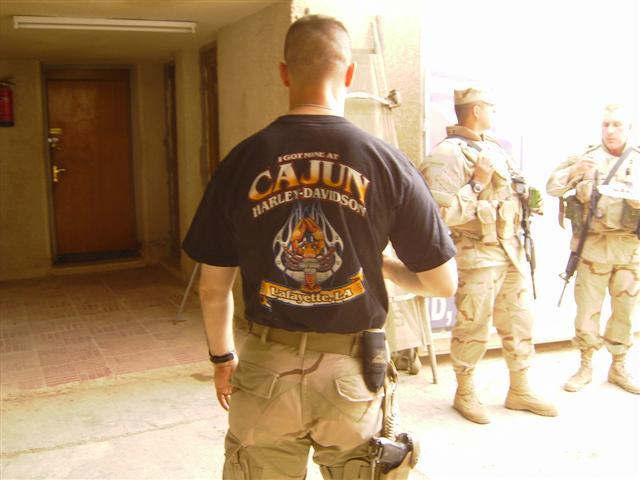
My brother-in-law who is serving with the Louisiana National Guard in Iraq is scheduled to come back home in November. His wife (my sister) has promised to let him get a Harley-Davidson when he gets back which will become his primary mode of transportation to and from work. She and the four kids have laid claim to his truck during his absence.
As you can see from this photo, he is already eagerly anticipating the new “Easy Rider” lifestyle he will be adopting when he gets back stateside.
Quagmire update
John Derbyshire over at NRO is one conservative who occassionaly makes sense - and thus makes his ideological cohorts uncomfortable. Here he is today making a salient point about the unexpected length of Bush’s war in Iraq:
...it is a fact that no American, in March 2003, thought we would have a huge army planted in Iraq 2 and a half years later. The administration did not even hint at such a possibility...
Our war against the Empire of Japan, 1941-45, lasted 1,347 days. The current war in Iraq, against a rabble of Arab hooligans, has lasted 861 days. If it lasts as long as WW2, it will end on November 25 next year. Do you really think it will have ended by then? Do you really think that Zarqawi and his gangs are as formidable an enemy as the Japanese Imperial Armed Forces? Do you really believe we are doing this right? Really?
...it is a fact that no American, in March 2003, thought we would have a huge army planted in Iraq 2 and a half years later. The administration did not even hint at such a possibility...
Our war against the Empire of Japan, 1941-45, lasted 1,347 days. The current war in Iraq, against a rabble of Arab hooligans, has lasted 861 days. If it lasts as long as WW2, it will end on November 25 next year. Do you really think it will have ended by then? Do you really think that Zarqawi and his gangs are as formidable an enemy as the Japanese Imperial Armed Forces? Do you really believe we are doing this right? Really?
Monday, July 25, 2005
Cheap Sunglasses
I would like to thank the person who left his Ray-Ban sunglasses at the Sears Parts & Service Center in College Station, Texas about 17 years ago.
I was working there that summer while finishing college and found the glasses on the counter. I placed them on a shelf underneath the register and there they sat for the next several weeks. Eventually, I claimed them for my own.
They are really nice sunglasses - smokey black lenses and a wire frame that wraps around your ears to hold them in place - much more expensive than I could have afforded back then.
Up until that point I was never able to hold on to a pair of sunglasses longer than a couple of months before I would lose them. I probably went through a dozen pair of cheap, $5 sunglasses before I latched on to this pair and never let go. The fact that I still have these glasses after 17 years is quite amazing to me. I’ve always assumed that if I had bought them myself I would have lost them long ago.
Funny how that works.
Today they are a bit worn and one of the lenses pops out on occasion, but I dare not let them go. It’s not like I found these glasses, after all. It’s more like they found me.

I was working there that summer while finishing college and found the glasses on the counter. I placed them on a shelf underneath the register and there they sat for the next several weeks. Eventually, I claimed them for my own.
They are really nice sunglasses - smokey black lenses and a wire frame that wraps around your ears to hold them in place - much more expensive than I could have afforded back then.
Up until that point I was never able to hold on to a pair of sunglasses longer than a couple of months before I would lose them. I probably went through a dozen pair of cheap, $5 sunglasses before I latched on to this pair and never let go. The fact that I still have these glasses after 17 years is quite amazing to me. I’ve always assumed that if I had bought them myself I would have lost them long ago.
Funny how that works.
Today they are a bit worn and one of the lenses pops out on occasion, but I dare not let them go. It’s not like I found these glasses, after all. It’s more like they found me.
Friday, July 22, 2005
Accepting the challenge
I’ve picked up the gauntlet that has been thrown down over at All Things Conservative. I’ve been having a lengthy and spirited debate (scroll down to comments) with Nigel Tufnel, the lead guitarist for Spinal Tap, over whether Valerie Plame Wilson was a covert agent with the CIA at the time that she was outed by high-level officials in the Bush administration.
I outlined my argument here, and Nigel has challenged my logic as being faulty. We have been going round and round for a couple of days and now he has offered the following challenge:
Here's a deal -- and Bill can vouch for my trustworthiness.
If Rove is indicted and convicted of a crime related to the Intelligence Identities Protection Act, I will author a post on Rhetoric & Rhythm fully conceding my erroneous understanding of the act and of Rove's crime and fully acknlowledging your brilliant analysis.
If Rove is indicted but not convicted of a crime related to the Intelligence Identities Protection Act, indicted for any lesser charge (to include obstruction of justice, of which he may very well be guilty), or not indicted for anything at all, you will author a reciprocal post on ATC acknowleding your erroneous understanding of the act and of Rove's non-crime and fully acknlowledging Bill's brilliant analysis.
I have accepted his challenge with certain provisions. I think it is possible that Rove could escape indictment and/or conviction without disproving that Plame was covert. So I offered this amended challenge on my part:
Let's say that if Rove is not indicted, or is indicted but not convicted of a crime related to the Intelligence Identities Protection Act because it is determined that Valerie Plame was not considered covert under the law, then I will author a mea culpa piece for ATC.
Or regardless of what happens to Rove, if it is determined through the course of the investigation that Plame was not a covert agent under the law, I would concede and admit that I was wrong.
We are still haggling over the details. Nigel thinks I’ve given myself too much wiggle room, but I’m willing to accept whatever determination the special prosecutor and the grand jury make regarding Plame’s covert status.
Needless to say, I am basing my position on my own non-lawyerly interpretation of the government statute that defines what a covert agent is. But I am also confident in that my position is supported by a lot of former intelligence agents who should know better than most.

I outlined my argument here, and Nigel has challenged my logic as being faulty. We have been going round and round for a couple of days and now he has offered the following challenge:
Here's a deal -- and Bill can vouch for my trustworthiness.
If Rove is indicted and convicted of a crime related to the Intelligence Identities Protection Act, I will author a post on Rhetoric & Rhythm fully conceding my erroneous understanding of the act and of Rove's crime and fully acknlowledging your brilliant analysis.
If Rove is indicted but not convicted of a crime related to the Intelligence Identities Protection Act, indicted for any lesser charge (to include obstruction of justice, of which he may very well be guilty), or not indicted for anything at all, you will author a reciprocal post on ATC acknowleding your erroneous understanding of the act and of Rove's non-crime and fully acknlowledging Bill's brilliant analysis.
I have accepted his challenge with certain provisions. I think it is possible that Rove could escape indictment and/or conviction without disproving that Plame was covert. So I offered this amended challenge on my part:
Let's say that if Rove is not indicted, or is indicted but not convicted of a crime related to the Intelligence Identities Protection Act because it is determined that Valerie Plame was not considered covert under the law, then I will author a mea culpa piece for ATC.
Or regardless of what happens to Rove, if it is determined through the course of the investigation that Plame was not a covert agent under the law, I would concede and admit that I was wrong.
We are still haggling over the details. Nigel thinks I’ve given myself too much wiggle room, but I’m willing to accept whatever determination the special prosecutor and the grand jury make regarding Plame’s covert status.
Needless to say, I am basing my position on my own non-lawyerly interpretation of the government statute that defines what a covert agent is. But I am also confident in that my position is supported by a lot of former intelligence agents who should know better than most.
Wednesday, July 20, 2005
The safe choice
Unless somebody turns up a photo of John Roberts dressed in women’s lingerie and spike heels while being spanked by his dominatrix, it is highly unlikely that his confirmation to the Supreme Court will see much turbulence.
While I imagine there will be a large number of Democrats who will vote against Roberts on principle, I think they are not likely to launch a filibuster unless something very sinister suddenly turns up to tarnish Roberts’ squeaky clean image.
Earlier I had advised Bush to pick a conservative out of the 90 percent pool of acceptable nominees and not the 10 percent of far-right nutjobs who would be sure to spark a confirmation fight. Now it seems as if Bush took this advice - sort of - and went with the most extreme conservative he could find in that 90 percent segment. Roberts may be the most conservative jurist who did not prompt a filibuster fight with Democrats.
I think it is interesting that Bush decided to break precedent by not choosing a woman to replace Sandra Day O’Connor on the high court. When Thurgood Marshall, the first black jurist, retired, Bush Sr. opted to replace him with another black judge, although his ideological opposite. But Bush Jr. decided not to replace the first female jurist with another woman leaving Ruth Bader Ginsburg as the only female on the nine-member court. That could change, of course, if William Rehnquist still steps down later this summer as expected.
There is still much to be learned about John Roberts and initial opinions will likely change, but right now it looks as if Bush made a safe choice by picking the most conservative person he could find who would not spark an all-out confirmation battle.
While I imagine there will be a large number of Democrats who will vote against Roberts on principle, I think they are not likely to launch a filibuster unless something very sinister suddenly turns up to tarnish Roberts’ squeaky clean image.
Earlier I had advised Bush to pick a conservative out of the 90 percent pool of acceptable nominees and not the 10 percent of far-right nutjobs who would be sure to spark a confirmation fight. Now it seems as if Bush took this advice - sort of - and went with the most extreme conservative he could find in that 90 percent segment. Roberts may be the most conservative jurist who did not prompt a filibuster fight with Democrats.
I think it is interesting that Bush decided to break precedent by not choosing a woman to replace Sandra Day O’Connor on the high court. When Thurgood Marshall, the first black jurist, retired, Bush Sr. opted to replace him with another black judge, although his ideological opposite. But Bush Jr. decided not to replace the first female jurist with another woman leaving Ruth Bader Ginsburg as the only female on the nine-member court. That could change, of course, if William Rehnquist still steps down later this summer as expected.
There is still much to be learned about John Roberts and initial opinions will likely change, but right now it looks as if Bush made a safe choice by picking the most conservative person he could find who would not spark an all-out confirmation battle.
Tuesday, July 19, 2005
Important questions
Now that we know who Bush's nominee is for the Supreme Court it is time to start asking the important questions.
Has he ever smoked marijuana?
Did he pay Social Security taxes for his nanny and his housekeeper? What about the gardener and the pool boy's immigration status?
Did he ever dodge the draft?
Has he ever cheated on his wife or been otherwise unfaithful in his marriage?
Did he ever sexually harass a female subordinate?
Has he ever bounced a check or failed to pay his taxes on time.
These and other important questions will have to be addressed before we can be sure that this is the right person to fill lifetime appointment on the highest court in the land.
Has he ever smoked marijuana?
Did he pay Social Security taxes for his nanny and his housekeeper? What about the gardener and the pool boy's immigration status?
Did he ever dodge the draft?
Has he ever cheated on his wife or been otherwise unfaithful in his marriage?
Did he ever sexually harass a female subordinate?
Has he ever bounced a check or failed to pay his taxes on time.
These and other important questions will have to be addressed before we can be sure that this is the right person to fill lifetime appointment on the highest court in the land.
Rove's Last Stand
This is courtesy of Billmon
Too funny.
But reinforcements may be on the way! Is that a Supreme Court nominee coming over the horizon just in time to distract the ravaging hordes?
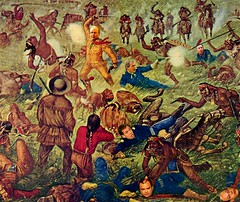
Too funny.
But reinforcements may be on the way! Is that a Supreme Court nominee coming over the horizon just in time to distract the ravaging hordes?
Killing the innocent
For the first time it looks like the government may be about to own up to the fact that a man was executed for a crime he did not commit.
... 25 years ago ... a 19-year-old drug dealer named Quintin Moss was gunned down from a slow-moving car... And the man convicted of the killing, Larry Griffin, was executed 10 years ago.
Yet the city's top prosecutor has decided to re-investigate the murder as if it just happened, out of new concerns that the wrong man may have been put to death for the crime.
...
should Ms. Joyce, the St. Louis circuit attorney, demonstrate Mr. Griffin was not the killer, as the report and even some members of the victim's family contend, it would be the first proven execution of an innocent person, so far as death penalty advocates or opponents can recall.
This would be a significant step in the debate over capital punishment. It is surely not the first time that an innocent person has been executed by our justice system, but it would be the first time that such an outcome has been officially acknowledged.
Still, it is important to remember that for true opponents of the death penalty the killing of innocents is only part of the problem. The death penalty is wrong even when its target is definitely guilty of the crime. Jesus did not insist on seeing proof that Mary Magdalene was innocent of the prostitution charges levied against her before he challenged the mob to let someone without sin cast the first stone.
... 25 years ago ... a 19-year-old drug dealer named Quintin Moss was gunned down from a slow-moving car... And the man convicted of the killing, Larry Griffin, was executed 10 years ago.
Yet the city's top prosecutor has decided to re-investigate the murder as if it just happened, out of new concerns that the wrong man may have been put to death for the crime.
...
should Ms. Joyce, the St. Louis circuit attorney, demonstrate Mr. Griffin was not the killer, as the report and even some members of the victim's family contend, it would be the first proven execution of an innocent person, so far as death penalty advocates or opponents can recall.
This would be a significant step in the debate over capital punishment. It is surely not the first time that an innocent person has been executed by our justice system, but it would be the first time that such an outcome has been officially acknowledged.
Still, it is important to remember that for true opponents of the death penalty the killing of innocents is only part of the problem. The death penalty is wrong even when its target is definitely guilty of the crime. Jesus did not insist on seeing proof that Mary Magdalene was innocent of the prostitution charges levied against her before he challenged the mob to let someone without sin cast the first stone.
Monday, July 18, 2005
Once a covert operative...
How does one stop being a covert operative for the CIA? I mean other than having Karl Rove leak your name to the media?
The truth is that one can never stop being a covert operative without exposing all of your intelligence sources to the possibility of retaliation and undermining any and all of your past covert activities.
One of the lamest, but apparently popular, defenses of Karl Rove being bandied about by Bush apologists lately is that there could not have been a crime committed in this case because they claim that Valerie Wilson was not a covert operative at the time that her name was leaked to the media. In fact, they go on, she had not been working overseas for more than five years by that point and therefore no longer met the definition of a covert agent. To bolster this claim they point to this definition of a covert agent in the National Security Act of 1947:
The term “covert agent” means—
(A) a present or retired officer or employee of an intelligence agency or a present or retired member of the Armed Forces assigned to duty with an intelligence agency—
(i) whose identity as such an officer, employee, or member is classified information, and
(ii) who is serving outside the United States or has within the last five years served outside the United States...
I want to call your attention to the comma in the above sentence that immediately precedes the ‘and’ in the (i) sub-definition. By placing the comma there it means the next portion of the sentence is a separate thought and is not needed to understand the meaning of the preceding portion of the sentence. But conservatives reading this definition have conveniently ignored the comma and treat the ‘and’ as meaning that the two segments must be combined to complete the meaning.
This is crucial because with the comma the definition is more inclusive and has a broader scope of what a covert agent is - including agents whose identity is classified as well as agents who works overseas now or in the past five years. Without the comma the definition can be read more exclusively to limit it to agents who meet both criteria - their identiy is classifed AND they must have worked overseas in the past five years.
Now this latter definition is not only incorrect, but would also be detrimental to our nation’s intelligence gathering capabilities. Imagine a rule that says after five years of inactivity information on our covert intelligence agents is suddenly part of the open record and “fair game” for anyone who wants to disseminate it in the mass media. The people who are positing this interpretation are either not thinking it through clearly (and to be charitable that is what I assume for most of them) or they are complete idiots.
So let’s stop and think about this a little bit more. If we really had such a thing as a five-year statute of limitations on protecting our covert agents and it could be clearly demonstrated that Valerie Wilson has not been actively working overseas for at least five years, then it would seem to be an open and shut case. So please explain why the Justice Department has spent the better part of two years and millions of taxpayer dollars pursuing this case. Because if that is the case then the only real scandal is why the special prosecutor is wasting our time and resources (not to mention throwing journalists in jail).
The truth of the matter is that Valerie Wilson was a covert agent at one time as this article makes clear:
The investigation was triggered when CIA lawyers asked the Justice Department to look into who revealed the identity of Wilson’s wife, who worked overseas under deep cover posing as a private industry energy analyst.
And the fact that she recently took time off to raise a family and had not been overseas in the past five years (assuming that is the case) is beside the point.
Plus, it is also highly likely that she was able to continue working as a covert agent while stateside by keeping in contact with her foreign sources via telephone and e-mail.
But all of that is now lost thanks to loose-lipped Karl Rove. Once he decided to fire up his signature smear operation against Ambassador Joseph Wilson he wasn’t about to let a little thing like our nation’s national security interests get in the way of his scoring political points against a critic of the administration.
The truth is that one can never stop being a covert operative without exposing all of your intelligence sources to the possibility of retaliation and undermining any and all of your past covert activities.
One of the lamest, but apparently popular, defenses of Karl Rove being bandied about by Bush apologists lately is that there could not have been a crime committed in this case because they claim that Valerie Wilson was not a covert operative at the time that her name was leaked to the media. In fact, they go on, she had not been working overseas for more than five years by that point and therefore no longer met the definition of a covert agent. To bolster this claim they point to this definition of a covert agent in the National Security Act of 1947:
The term “covert agent” means—
(A) a present or retired officer or employee of an intelligence agency or a present or retired member of the Armed Forces assigned to duty with an intelligence agency—
(i) whose identity as such an officer, employee, or member is classified information, and
(ii) who is serving outside the United States or has within the last five years served outside the United States...
I want to call your attention to the comma in the above sentence that immediately precedes the ‘and’ in the (i) sub-definition. By placing the comma there it means the next portion of the sentence is a separate thought and is not needed to understand the meaning of the preceding portion of the sentence. But conservatives reading this definition have conveniently ignored the comma and treat the ‘and’ as meaning that the two segments must be combined to complete the meaning.
This is crucial because with the comma the definition is more inclusive and has a broader scope of what a covert agent is - including agents whose identity is classified as well as agents who works overseas now or in the past five years. Without the comma the definition can be read more exclusively to limit it to agents who meet both criteria - their identiy is classifed AND they must have worked overseas in the past five years.
Now this latter definition is not only incorrect, but would also be detrimental to our nation’s intelligence gathering capabilities. Imagine a rule that says after five years of inactivity information on our covert intelligence agents is suddenly part of the open record and “fair game” for anyone who wants to disseminate it in the mass media. The people who are positing this interpretation are either not thinking it through clearly (and to be charitable that is what I assume for most of them) or they are complete idiots.
So let’s stop and think about this a little bit more. If we really had such a thing as a five-year statute of limitations on protecting our covert agents and it could be clearly demonstrated that Valerie Wilson has not been actively working overseas for at least five years, then it would seem to be an open and shut case. So please explain why the Justice Department has spent the better part of two years and millions of taxpayer dollars pursuing this case. Because if that is the case then the only real scandal is why the special prosecutor is wasting our time and resources (not to mention throwing journalists in jail).
The truth of the matter is that Valerie Wilson was a covert agent at one time as this article makes clear:
The investigation was triggered when CIA lawyers asked the Justice Department to look into who revealed the identity of Wilson’s wife, who worked overseas under deep cover posing as a private industry energy analyst.
And the fact that she recently took time off to raise a family and had not been overseas in the past five years (assuming that is the case) is beside the point.
Plus, it is also highly likely that she was able to continue working as a covert agent while stateside by keeping in contact with her foreign sources via telephone and e-mail.
But all of that is now lost thanks to loose-lipped Karl Rove. Once he decided to fire up his signature smear operation against Ambassador Joseph Wilson he wasn’t about to let a little thing like our nation’s national security interests get in the way of his scoring political points against a critic of the administration.
Friday, July 15, 2005
Blaming the media
So Karl Rove is supposedly claiming that Plame’s CIA identity was just some rumor that had been floating around in the press corps? Some gossip he overheard and then passed along innocently to a national newspaper columnist?
Rove testified last year that he remembers specifically being told by columnist Robert Novak that Valerie Plame, the wife of a harsh Iraq war critic, worked for the CIA.
How interesting. But that’s not what Novak has said:
Novak, in an interview, said his sources had come to him with the information. "I didn't dig it out, it was given to me," he said. "They thought it was significant, they gave me the name and I used it."
I wonder who has been lying to the Grand Jury, Rove or Novak?
So far this case has been exciting a lot of commentary from the local blog community.
Eddie Rodriguez at The Red State has been working hard to debunk the avalanche of spin coming out of the White House on this issue.
The other day Bill Crawford at All Things Conservative helpfully reprinted the GOP “talking points” that try to smear Ambassador Joseph Wilson by repeating a lot of lies and misrepresentations of things he has said in the media. What exactly this has to do with the outing of his wife as a CIA agent I’m not sure. Perhaps they believe that the public will think that it is OK to expose our CIA operatives’ identities as long as their relatives’ reputations have been adequately besmirched first.
Josh Marshall sums it up pretty well here.
Now today, Bill is jumping all over the strange “Rove blames media” story claiming it completely vindicates him and puts the onus on Democrats for ever criticizing poor Rove in the first place.
But over at B & B Peter Bryant gives us a different analysis of the same story:
If we believe the Rove-friendly account in today's papers, someone had already spread around Plame's CIA job to both Novak and Rove. Who? Rove, by the account in the Washington Post, has conveniently forgotten.
If we don't believe the Rove-friendly account, then this timing is extremely suspicious.
Congrats to Peter on having his piece cross-posted at TPM Cafe.
For those who desperately want to believe Rove’s story that some reporter was responsible for outing Plame first there is still one big question that must be answered - How did a journalist with no security clearance get ahold of this classified information in the first place? And how convenient that they should happen to get it right at a time when it helps the White House in their effort to damage the credibility of a top critic of their Iraq policy.
Rove testified last year that he remembers specifically being told by columnist Robert Novak that Valerie Plame, the wife of a harsh Iraq war critic, worked for the CIA.
How interesting. But that’s not what Novak has said:
Novak, in an interview, said his sources had come to him with the information. "I didn't dig it out, it was given to me," he said. "They thought it was significant, they gave me the name and I used it."
I wonder who has been lying to the Grand Jury, Rove or Novak?
So far this case has been exciting a lot of commentary from the local blog community.
Eddie Rodriguez at The Red State has been working hard to debunk the avalanche of spin coming out of the White House on this issue.
The other day Bill Crawford at All Things Conservative helpfully reprinted the GOP “talking points” that try to smear Ambassador Joseph Wilson by repeating a lot of lies and misrepresentations of things he has said in the media. What exactly this has to do with the outing of his wife as a CIA agent I’m not sure. Perhaps they believe that the public will think that it is OK to expose our CIA operatives’ identities as long as their relatives’ reputations have been adequately besmirched first.
Josh Marshall sums it up pretty well here.
Now today, Bill is jumping all over the strange “Rove blames media” story claiming it completely vindicates him and puts the onus on Democrats for ever criticizing poor Rove in the first place.
But over at B & B Peter Bryant gives us a different analysis of the same story:
If we believe the Rove-friendly account in today's papers, someone had already spread around Plame's CIA job to both Novak and Rove. Who? Rove, by the account in the Washington Post, has conveniently forgotten.
If we don't believe the Rove-friendly account, then this timing is extremely suspicious.
Congrats to Peter on having his piece cross-posted at TPM Cafe.
For those who desperately want to believe Rove’s story that some reporter was responsible for outing Plame first there is still one big question that must be answered - How did a journalist with no security clearance get ahold of this classified information in the first place? And how convenient that they should happen to get it right at a time when it helps the White House in their effort to damage the credibility of a top critic of their Iraq policy.
Thursday, July 14, 2005
Losing confidence
The Wall Street Journal poll that is out today has Bush down to a 46 percent approval rating with 52 percent saying the country in on the wrong track.
The Journal says that Bush's standing has been hurt by Iraq, his Social Security privatization scheme, and most recently by the Karl Rove scandal. The Journal story further warns that Bush "faces further political peril" if his Supreme Court nominee becomes embroiled in a protracted partisan battle.
Meanwhile, in another WSJ story we learn that Special Prosecutor Patrick Fitzgerald is spending more and more of his time focused on Karl Rove and what he told Time reporter Matthew Cooper. I think an indictment is almost inevitable at this point.
I expect to hear Bush announce soon that he has "full confidence" in Rove, which is always a sure signal that someone is about to get axed.
Even if Rove stays though, Democrats are trying to raise the heat index on him by pushing legislation to revoke his security clearance. Imagine if the president's top aide had to excuse himself everytime any confidential security matter was being discussed. At least Rove can always take a job with the Journal's editorial board where they are waiting to give him a medal for blabbing about one of our CIA operatives.
The Journal says that Bush's standing has been hurt by Iraq, his Social Security privatization scheme, and most recently by the Karl Rove scandal. The Journal story further warns that Bush "faces further political peril" if his Supreme Court nominee becomes embroiled in a protracted partisan battle.
Meanwhile, in another WSJ story we learn that Special Prosecutor Patrick Fitzgerald is spending more and more of his time focused on Karl Rove and what he told Time reporter Matthew Cooper. I think an indictment is almost inevitable at this point.
I expect to hear Bush announce soon that he has "full confidence" in Rove, which is always a sure signal that someone is about to get axed.
Even if Rove stays though, Democrats are trying to raise the heat index on him by pushing legislation to revoke his security clearance. Imagine if the president's top aide had to excuse himself everytime any confidential security matter was being discussed. At least Rove can always take a job with the Journal's editorial board where they are waiting to give him a medal for blabbing about one of our CIA operatives.
Wednesday, July 13, 2005
The Ideal Supreme Court candidate
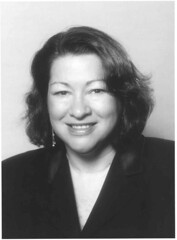
Here is Bush’s ideal Supreme Court nominee. A Hispanic female with lots of judicial experience who was first appointed to the bench by Bush’s father. Plus she is guaranteed to have an easy confirmation.
Of course, this presumes that Bush wants an easy confirmation process. But there are many reasons why he would rather appoint someone more extreme and provoke a fight. First, it would satisfy his base of extremist religious right fundamentalists. Second, it would distract the public’s attention away from the mess in Iraq, Bush’s failed domestic agenda and the Karl Rove scandal.
Subscribe to:
Posts (Atom)